At a fraud prevention webinar put on a few years ago by the Nova Scotia chapter of the Canadian Association of Retired Persons (CARP) the veteran RCMP officer, who was part of the presentation, made a telling comment at the end of it. He said if you want a telltale sign that you may be under attack by a scammer it will come when they suggest you need to do a wire transfer to send your money to whatever account they have created deceptively to have you believe it is legitimate and what you are doing through this impersonation scam is real.
In Canada’s Bank Act there is a section clearly referencing what is appropriate and suitable for a consumer. Here is what resulted in an online search on this matter.
Canada’s Bank Act mandates that federally regulated financial institutions must offer and sell products and services that are appropriate for the consumer’s needs. This legal obligation is a core pillar of Canada’s Financial Consumer Protection Framework, which legally enforces product appropriateness and suitability. [1, 2, 3]
Key Legal Requirements
The Financial Consumer Agency of Canada (FCAC), which administers these consumer provisions under the Bank Act, enforces specific rules regarding product suitability: [1, 2, 3]
- Know Your Consumer: Banks must gather and assess a customer’s financial circumstances, goals, and needs before offering any financial instrument. [1]
- Assess Appropriateness: Financial institutions must evaluate whether a product’s features, risks, and fees actively align with that specific consumer s profile. [1]
- Proactive Refusal: If a bank determines a financial instrument is not appropriate for a consumer, they are expected to explicitly inform the consumer of this assessment. [1]
Considering what is stated above, this post below reinforces the message that consumers and banks need to be on the lookout and be wary of financial instruments that may well not be in the best interest of serving the consumer.

The FinCrime Institute
Educating the Future of Financial Crime Prevention
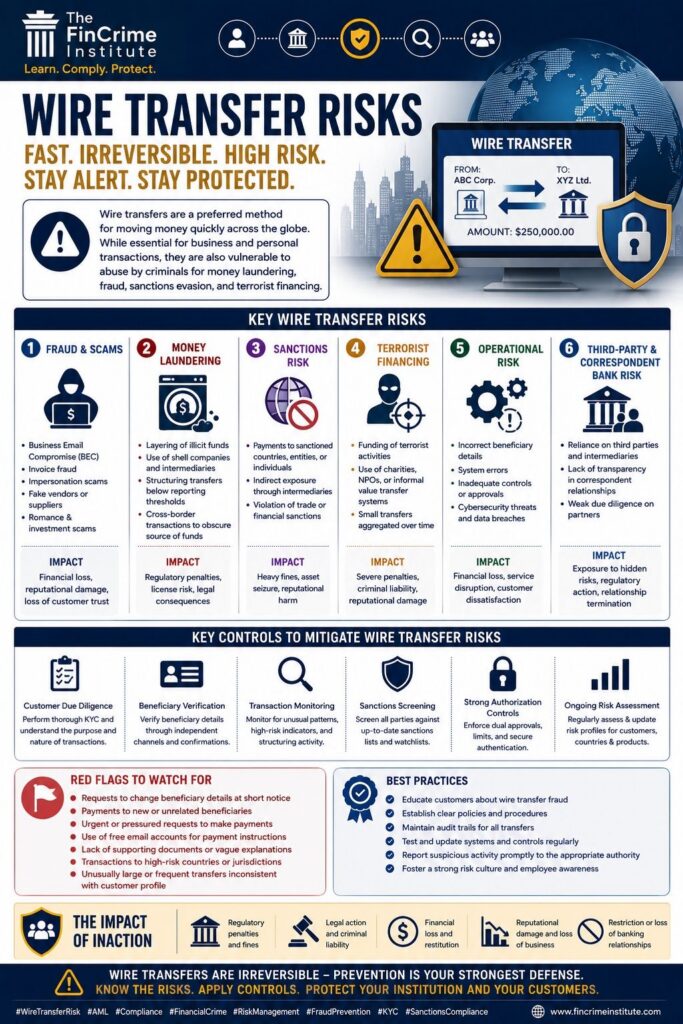
💸 **Wire Transfer Risks: Fast Transactions, Lasting Consequences**
Wire transfers are one of the most efficient ways to move money globally—but their speed and irreversibility also make them a preferred channel for fraudsters, money launderers, sanctions evaders, and other financial criminals.
🚨 Key Risks Associated with Wire Transfers:
• Business Email Compromise (BEC) scams
• Money laundering through layered transactions
• Sanctions and embargo violations
• Terrorist financing activities
• Beneficiary and payment instruction fraud
• Third-party and correspondent banking risks
🔍 Red Flags to Watch:
✔️ Sudden changes in beneficiary details
✔️ Urgent requests for payment
✔️ Transactions involving high-risk jurisdictions
✔️ Unusual transfer patterns inconsistent with customer profiles
✔️ Payments lacking a clear business purpose
Effective KYC, sanctions screening, transaction monitoring, beneficiary verification, and employee awareness are critical to reducing wire transfer-related risks.
Remember: Once a wire transfer is processed, recovering funds can be extremely difficult. Prevention is always better than remediation.
hashtag#AMLEdge hashtag#WireTransferRisk hashtag#AML hashtag#FinancialCrime hashtag#Compliance hashtag#KYC hashtag#TransactionMonitoring hashtag#SanctionsScreening hashtag#FraudPrevention hashtag#RiskManagement hashtag#BankingCompliance hashtag#FinancialServices hashtag#MoneyLaundering hashtag#AntiMoneyLaundering