Whether it be the fraud investigator making the rounds to the financial institution branches to make a presentation and answer any questions in a group or individually, getting out to the frontlines of your interface with customers is crucial and invaluable in helping prevent fraud.
Training branch staff by making them aware of how they can be instrumental in stopping a fraud from being carried out and what to question when they a transaction is suspicious, is time well spent and not one that may come out in an email or communication that is not prompted from an in-person session with staff.
Getting people to open up and talk is never a waste of time as can be revealing in what is being discussed. It also has to be understood that a good fraud investigator will visit a branch knowing what the fraud incident record is so will know in advance that better detection and prevention can be improved. Conversely, they should also be advised what scams were prevented due to alert staff asking questions and not processing a customer request right away without giving it a second thought.
One obvious benefit to branch visits as cited below is explaining what red flags there are as staff may be unsure of certain situations and circumstances that they are confronted with.
Investigators have the expertise and knowledge to educate staff, not just execute and carry out a thorough investigation when necessary.
Everyone working in a financial institution from the CEO to the frontline staff need to make fraud a core function they wholeheartedly support and embrace. This is totally in keeping with protecting their customers from losing money they did not believe or expect could happen.
Financial Crimes & Fraud Investigator | CCUFC | Investigative Interviewing | U.S. Army Veteran | FuelMI Young Professional
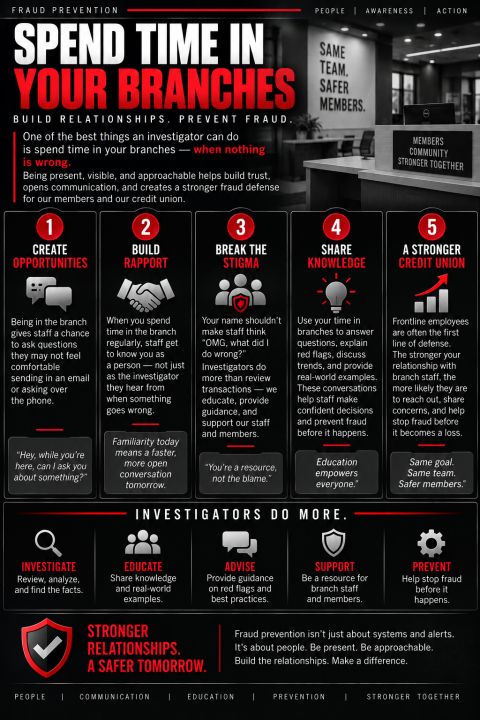
SPEND TIME IN YOUR BRANCHES.
One piece of advice I would give investigators:
Spend time in your branches when nothing is wrong.
Not because you have a case to investigate.
Not because you need camera footage.
Not because someone made a mistake.
Just spend some time with the people working there.
Your branch staff may have questions they haven’t wanted to send in an email or ask over the phone. Sometimes being physically present creates an opportunity for someone to say:
“Hey, while you’re here, can I ask you about something?”
Those conversations matter.
Spending time in your branches also helps build rapport before you need something from them.
Because investigators can sometimes develop a reputation.
Your name pops up on someone’s phone or in their inbox and their first thought is:
“Oh no. What did I do wrong?”
That’s a stigma I think investigators should actively work to eliminate.
Yes, sometimes we’re reaching out because something went wrong.
But that’s only one part of what we do.
Investigators investigate. We also educate.
We answer questions.
We explain why something may be a red flag.
We help employees think through situations they’re unsure about.
We provide guidance when something doesn’t quite feel right.
We educate members when the opportunity presents itself.
And sometimes we’re simply another resource employees can use before a situation turns into a loss.
That relationship becomes much easier to build when the only time branch employees hear from you isn’t when there’s a problem.
If you’ve already spent time talking with them, answering questions and learning how their branch operates, the next interaction feels different.
You’re no longer just “the investigator.”
You’re someone they know they can call.
And that matters because frontline employees are often the first people to see something suspicious.
I don’t want employees hesitating to contact me because they’re worried they’re asking a stupid question or because they associate the Fraud Department with getting in trouble.
I’d much rather answer a question that turns out to be nothing than find out later that someone noticed something and didn’t feel comfortable speaking up.
Fraud prevention isn’t just systems, alerts and investigations.
It’s relationships too.
Spend time in your branches.
Build the rapport before you need it.
Be someone your frontline staff wants to call, not someone they’re afraid to hear from.