A key component of any fraud prevention program is training financial institution staff to be alert to scams and set up systems and steps to prevent them from being successfully carried out against clients and the institution which the fraudsters are using to launder money at the sending or receiving end of a fraudulent transaction attempt.
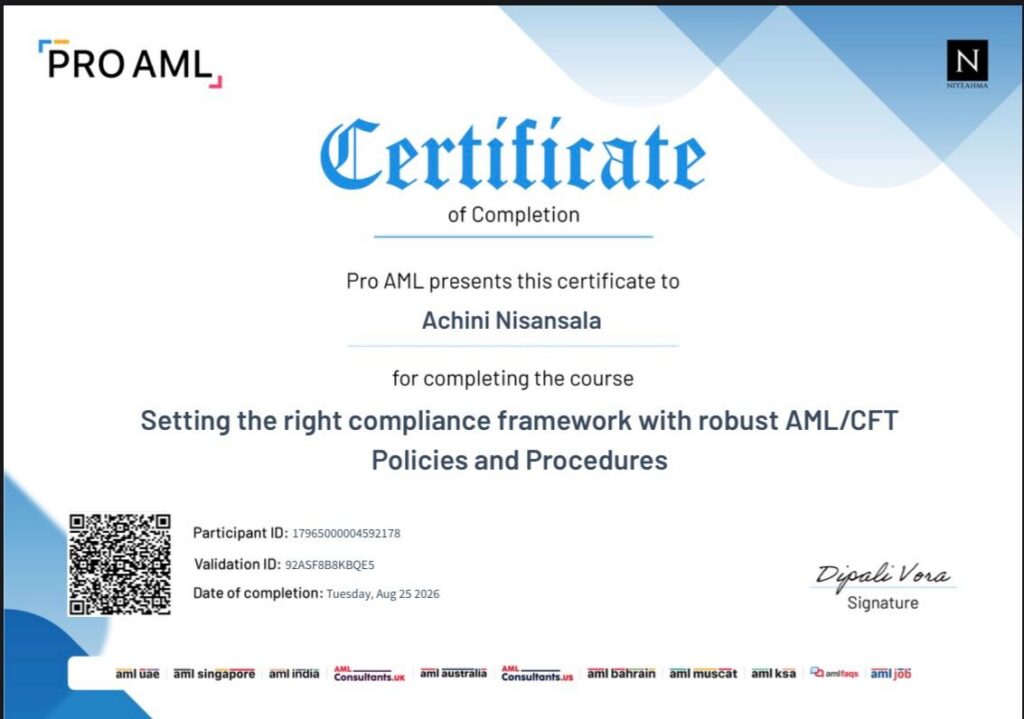
The LinkedIn post below showcases a proud recent graduate of an AML compliance certificate program. Ms. Nisansala was right to refer to the word ‘robust’ as fraud is continually evolving, so compliance training and tools must keep up too with different applications of fraud. Many now enlist victims by manipulating and deceiving them to be the agent of the delivery of money to the fraudsters (i.e., money transferred to a mule account). They have been misled to believe what they are doing is legitimate.
The other point to be made here is all the training in the world to detect and prevent fraud online or at branch level will not work if the systems that have been set up by well-trained compliance staff are not being followed and adhered to. They need to be actively supported by senior management with fraud prevention as a core function of what they do to protect their clients.
Compliance Review Officer at Trust payments | Risk Analyst at Trust payments | Forensic Associate at Ernst & Young | BBM (Honours) degree in Auditing and Forensic Accounting
I’m pleased to share that I have successfully completed the course “Setting the Right Compliance Framework with Robust AML/CFT Policies and Procedures.” Presented by Pro AML
One of my key takeaways is that effective compliance goes beyond simply executing tasks or following procedures. As Compliance Officers, we should understand how to design, implement, and maintain a robust AML/CFT framework that aligns with regulatory expectations, business objectives, and the organization’s specific risk profile.
Most importantly, we should be able to draft effective AML/CFT policies and procedures that are aligned with our business model and sector-specific risks. A strong compliance framework should be risk-based, fit for purpose, and practical for the business- not simply a standard policy applied across every organization.
This course has further strengthened my understanding of how to build and maintain an effective AML/CFT framework while balancing regulatory requirements, business strategy, and financial crime risks.
Another valuable step forward in my professional journey in AML/CFT, Compliance, Fraud investigation & Financial Crime Risk Management.🔍📚