As this fraud and AML professional indicates, red flags give reason to investigate further. You need to recognize them and act immediately to ensure the transaction is legitimate.
In doing so, it can be the difference between stopping a fraudulent transaction and not sending money into the hands of proceeds of crime with all the inherently bad outcomes which will be funded by this newfound windfall.
Strong financial institution leadership and governance should without fail support professionals like the one featured here who are dedicated to improving their learning and expertise so they will be more effective at detecting and preventing fraud.
Keep the fraudsters on the outside of the fraud prevention framework shield which should act as a force field where unwanted interference is repulsed. This includes identifying and stopping authorized push payments as signals often emerge to question how a customer may under the influence and being manipulated by a third party with evil intent.
Fraud & AML Professional | Risk Operations | Payment Risk Operations | KYC & EDD | Fraud Investigations | Financial Crime | Ex-Amazon
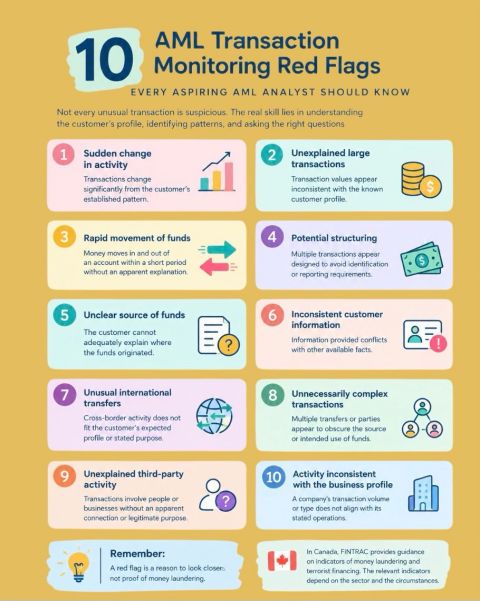
10 AML Transaction Monitoring Red Flags Every Aspiring AML Analyst Should Know
Not every unusual transaction is suspicious. The real skill is recognizing patterns, understanding the customer’s profile, and knowing when to look closer.
From sudden changes in transaction activity to unexplained movement of funds, these indicators can help guide further investigation.
Remember: A red flag is a reason to investigate further, not proof of money laundering.
As I continue my journey from fraud investigations toward AML, I’m learning how these concepts connect to Canada’s financial crime prevention framework.
Official resource: FINTRAC ; Money laundering and terrorist financing indicators
Which red flag would you like to explore through a practical case study?
#AML #TransactionMonitoring #FINTRAC #FinancialCrime #FraudPrevention #RiskManagement #Canada #FromFraudToAML