In this current environment, where fraud through enabled AI, is so prevalent and pervasive within our global financial system, our financial institutions as frontline gatekeepers from keeping the wolves from getting your money must adopt a fraud prevention framework which delivers results, not reports after the fact.
Enhanced Due Diligence (EDD) is one that should be employed when red flags raise suspicion and raise more questions and further investigation.
KYC & AML | CDD | Transaction Monitoring | Financial Crime Compliance | Excel
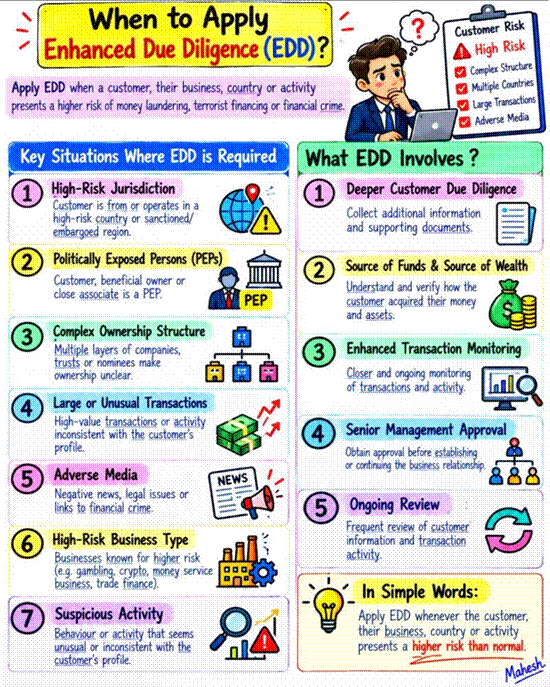
🔎 When Should Enhanced Due Diligence (EDD) Be Applied?
EDD is not simply “more KYC.” It is a risk-based approach used when a customer, relationship, product, geography, or activity presents higher financial crime risk.
🚩 Common situations that may require enhanced scrutiny:
• High-risk jurisdictions
• PEP relationships
• Complex ownership structures
• Large or unusual transactions
• Relevant adverse media
• Higher-risk business activities
• Suspicious or inconsistent activity
What can EDD involve?
🔍 Deeper customer verification
💰 Understanding Source of Funds & Source of Wealth
📊 Enhanced transaction monitoring
👥 Senior management approval, where required
🔄 More frequent ongoing reviews
💡 Key takeaway:
Higher risk → Deeper understanding → Stronger controls
And remember: a risk indicator alone does not automatically mean financial crime. The customer should be assessed using a documented, risk-based approach and applicable regulatory requirements.
#EDD #KYC #AML #AMLCompliance #EnhancedDueDiligence #FinancialCrime #Compliance #RiskManagement #CDD #PEP #TransactionMonitoring #Banking #FinTech