
Protecting clients’ or members’ money in the case of a credit union should always be a top priority. Scams are so prevalent now with different and more deceptive techniques being employed all the time with the use of AI to exploit unsuspecting victims.
Seniors in particular can be vulnerable to them. This is recognized in Canada where all the participating financial institutions, including Canada’s big banks, under the membership of the Canadian Bankers Association (CBA), must appoint a seniors champion to oversee compliance as part of their obligation to follow and report annually to the Financial Consumer Agency of Canada on how they are making progress with respect to the Code of Conduct for the Delivery of Banking Services for Seniors. It was implemented in 2019.
One core principle of the Seniors Code is financial harm mitigation. It requires the financial institution to take steps to mitigate potential financial abuse or fraud.
After reading the article below it is clearly apparent there are more than a few champions looking out for the financial well-being of their members in this New Hamshire credit union. It goes beyond just helping seniors who are often targets of scams such as grandparent schemes. You are empowering and training front-line staff to protect all members here from becoming a victim of a scam. It is worth fighting for.
Let’s look for champions in any branch you may frequent and connect with to get the help and protection you need when entrusting the employees and management with your money.
How one credit union empowers employees in the fight against scams
A list of scam warning signs has helped young employees at New Hampshire-based Service Credit Union feel more confident questioning members who might be victims, an executive said.

Creative Getty Images
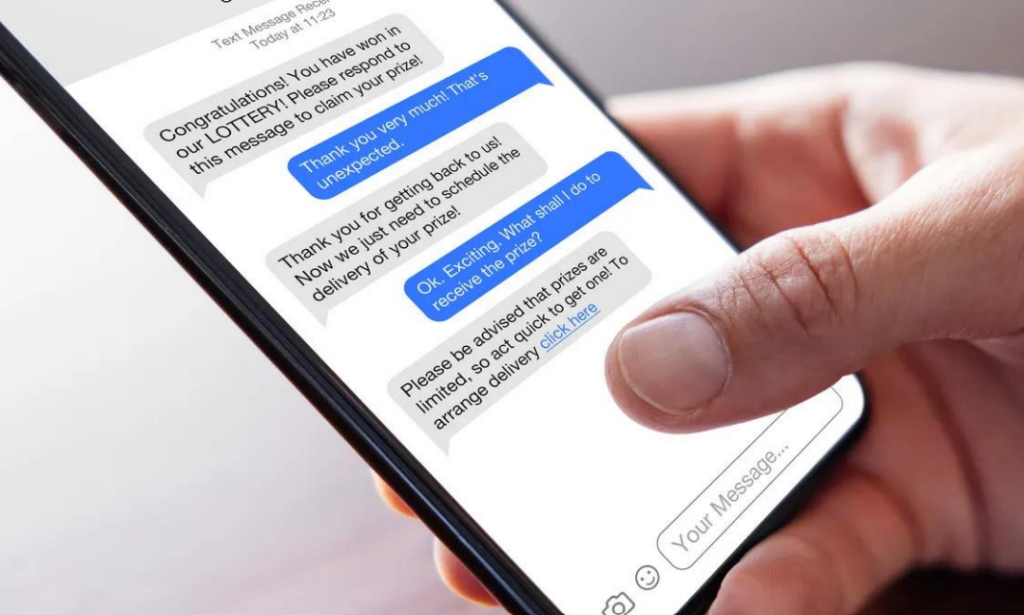
As fraud and scams proliferate, a New Hampshire credit union has benefited from circulating a checklist designed to alert customers and employees of signs of possible scams.
Service Credit Union, a $6 billion-asset credit union based in Portsmouth, New Hampshire, aims to bolster awareness of suspicious activity targeting members, said Stephanie McNamara, an assistant vice president and loss mitigation operations lead at the credit union.
Posted in branch locations and given to employees, the alert lists red flags, such as a customer being told they’ve won a prize or must pay a fee, or to keep a transaction secret and refrain from telling a financial institution about it, McNamara said March 12 during a webinar hosted by the National Credit Union Administration and the Federal Deposit Insurance Corp.
“These are the things we’re hearing from victims of successful scams, who we talk to down the line,” she said.
She noted the benefit of arming staff – and young employees, in particular – with that information, she said.
“The member doesn’t realize they’re being scammed, so you have to know it before they do,” McNamara said.

Access now➔
TRENDLINE
The growing use of AI in banking
The credit union is among the many financial institutions bolstering staff and customer education of fraud and scams as schemes grow more sophisticated and losses mount. Young employees, who might be in their first job, may not be comfortable questioning a customer on the topic. The checklist has “helped them feel more confident in what to ask someone,” McNamara said.
The fraud alert checklist was introduced in October 2025 as a handout for staff to use, and displayed on screens in branches shortly thereafter, a Service Credit Union spokesperson said.
The credit union has about 50 branches across New England and Germany. “Even though we do see a lot of turnover in the branches, some of the more tenured members have been around and seen a lot of examples of fraud,” McNamara said.
Online account takeovers, done via social engineering, and check fraud are the two biggest types of fraud and scams Service encounters, she said. Staff unsure about a large check are encouraged to put an extended hold on it, or ask more detailed questions when they notice something out of the ordinary for a member.
Communication among the credit union’s fraud investigators and between fraud investigators and both back-office and front-line staff is also crucial to thwarting scam attempts, McNamara said.
“As these risks for consumers escalate, financial institutions should prioritize strong internal controls, heightened oversight, and educate their members, customers, employees about common fraud schemes,” Matthew J. Biliouris, director of NCUA’s consumer financial protection office, said during the webinar.
The Consumer Federation of America estimates Americans are losing about $119 billion each year to online scams, according to a new report. Bank and credit union executives have called for a national strategy and more coordination to combat the snowballing fraud problem. President Donald Trump last week signed an executive order intended to confront cybercrime and fraud schemes.
Financial fraud has become one of the world’s “most severe and rapidly evolving transnational crimes,” and “AI-enhanced” fraud is 4.5 times more profitable than traditional methods, according to an Interpol report released Monday.
Christina Tetreault, deputy commissioner at California’s Department of Financial Protection and Innovation, said fraud has been on the rise the last five years, “but the real game-changer appears to be AI in terms of its ability to allow fraudsters to escape detection, to elude defenses that would have previously worked, and also to trick consumers.”
Investment fraud and impostor schemes are prevalent, and artificial intelligence is helping scammers imitate people more easily, Tetreault said March 11 during a Banking Dive and Payments Dive virtual event.
She pointed to a scam in which the state’s enforcement team took action against a company soliciting investment by using an AI-generated CEO to appeal to investors.
Many scams and frauds are being perpetrated by “vast scam compounds” outside the U.S., Tetreault said.
When Service Credit Union encounters a fraud ring, the financial institution will post banners on its website and email members to let them know what’s going on. But getting through to everyone can be “a tough nut to crack,” McNamara said.
“You can put a lot out there, but not every member is going to visit your website or call in, so how do you engage people that are not necessarily wanting to read an email from their bank or credit union?” she said.
Beating back fraud is a constant battle: McNamara noted the credit union has a two-way texting alert system, so it can ask a customer if they did, in fact, make a certain transaction flagged as suspicious, and the member can respond “yes” or “no.” But fraudsters now mimic those text messages, too, she said.
The credit union tries to inform members without tipping off fraudsters, she said. “We might say, ‘You’ll never receive a text from the credit union that doesn’t come from a fivedigit number,’ but we won’t actually say what the number is,” she said.
To stay on top of the evolving threat landscape, McNamara encouraged bank and credit union employees to “be a sponge” and seek out the latest industry information on fraud and scams from trade groups, regulators and others.
The FDIC’s Money Smart program has a curriculum that teaches front-line bank staff about types of scams and aims to bolster their confidence so they can question customers who might be victims. The AARP’s BankSafe Initiative also offers training designed to help bank employees identify signs of financial exploitation of older adults.
Additionally, “vendors often offer fraud-related education. Sometimes it’s a sales pitch, too, but there’s usually some good intel that you can pull out from that,” McNamara said.