The use of AI to dupe consumers and business is well documented and means everyone has to step up their vigilance and controls to avoid more sophisticated AI enabled schemes to remove us of our money.
As this LinkedIn fraud and payment expert states in the post below, “AI is making all of those signals easier to manipulate. And the danger isn’t necessarily that businesses have no controls. It’s that some of those controls may rely on the very signals fraudsters can now imitate.”

Co-Founder @ Fraud Pulse | Fraud & Payments Expert | Diagnosing & Fixing Broken Fraud Systems
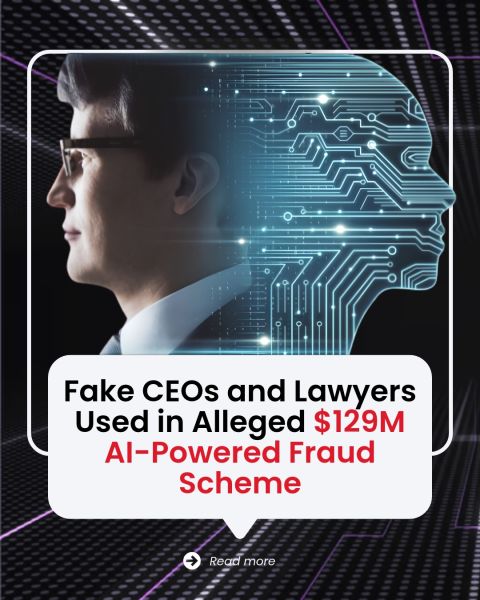
3 people have been charged in connection with an alleged $129 million fraud scheme. The interesting part is how they convinced companies to send the money.
US prosecutors have said the suspects used AI to impersonate CEOs and lawyers, convincing employees to authorise large financial transfers. The process was surprisingly sophisticated, but not uncommon.
1/ First, an employee would receive instructions from someone appearing to be their CEO about a confidential transaction.
2/ Then, they’d be directed to a lawyer at a major law firm who would seemingly validate the deal.
3/ Except both the CEO and the lawyer were allegedly impersonated using AI.
4/ The money would then be transferred to accounts controlled by the fraudsters.
This brings me to a principle I’ve always found relevant to fraud prevention: Trust the instruments.
In aviation, pilots are trained to rely on their instruments when their senses become unreliable.
I think we’re approaching a similar situation in fraud prevention. For years, businesses have relied on familiar signals to establish trust. Recognising someone’s voice. Seeing their face. Receiving instructions from a senior executive. Getting confirmation from a seemingly independent third party.
AI is making all of those signals easier to manipulate. And the danger isn’t necessarily that businesses have no controls. It’s that some of those controls may rely on the very signals fraudsters can now imitate.
Now we need to ask:
☑️ Can we verify an instruction independently of the channel it arrived through?
☑️ Are changes to payment details subject to additional checks?
☑️ Does a large or unusual transfer trigger verification, regardless of who requests it?
☑️ Are multiple approvals genuinely independent, or simply reinforcing the same false information?
☑️ Can we establish a clear record of who authorised a payment and how?
Trust the instruments. Not just what you see and hear.
The key is to understand which signals are genuinely reliable, which can be manipulated, and where additional verification is justified. And some amount of friction through additional checks can be beneficial here.
The technology behind fraud is changing rapidly but the underlying principle of good fraud prevention hasn’t changed.
Don’t confuse something that appears legitimate with something you’ve independently verified.
Most Relevant
Idan, step 2 is the one I’d underline. The lawyer looked independent, but the fraudsters chose him, so he was part of the same channel. An independent check has to be one the payer finds on its own, and it has to exist before the request does. The same goes for the destination. The strongest test of “is this account really theirs?” is something the recipient published on its own before anyone asked for money, not a confirmation from a contact named in the request. For crypto payments, I build that check: a business proves its payment addresses on its own domain, and the payer looks them up before sending. Which of your five checks do companies skip most often?