Being proactive by applying similar forewarnings and protocols to recommend consumers take (e.g., stop, think and verify before you act) when it comes to avoid being duped by a scammer is distinctly possible with a financial institution entrusted with protecting a client’s money.
It is evident from the example shown below. There are clear red flags which have been itemized on this financial vulnerability blog which financial institutions know about and should act on before withdrawing or sending money which may never be recovered.
Good for Arjun Chellappa for doing this LinkedIn post.

Arjun Chellappa
Team Lead – Ops Security | BFSI Shared Services | Fraud Preventi …
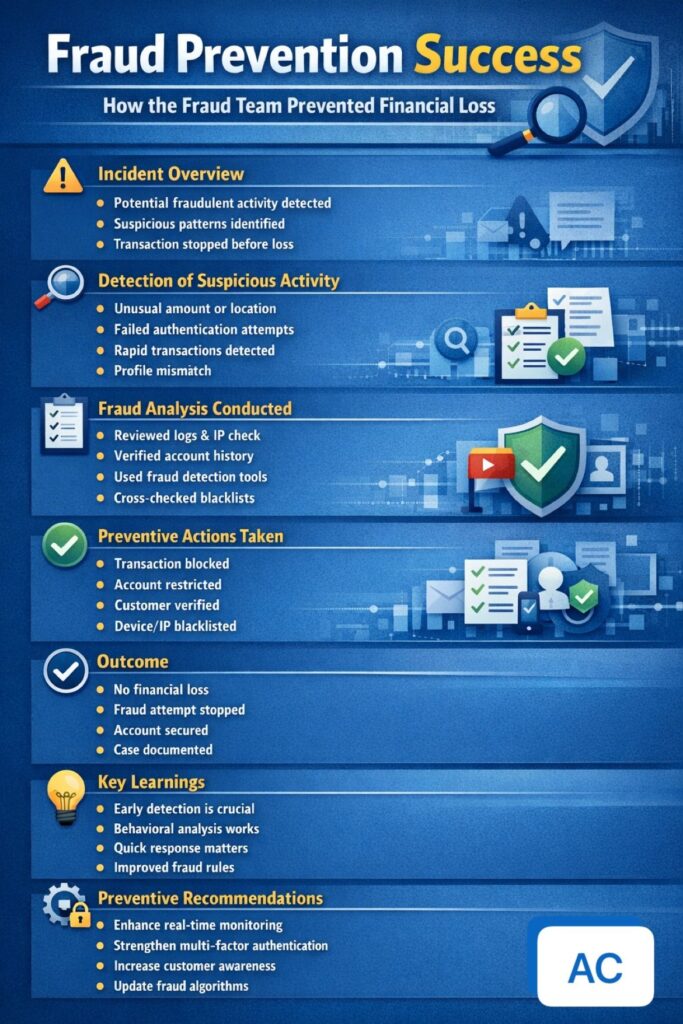
Presenting a fraud that was prevented by the fraud team. (Example)
1. Incident Overview
•A potential fraudulent activity was detected during routine transaction monitoring.
•The Fraud Prevention Team identified suspicious patterns that deviated from normal customer behavior.
•Immediate actions were taken to stop the transaction before financial loss occurred.
2. Detection of Suspicious Activity
Important signals that raised the alert:
•Unusual transaction amount or frequency
•Transactions initiated from unrecognized device or location
•Multiple failed authentication attempts
•Rapid transactions within a short time window
•Mismatch between customer profile and transaction behavior
3. Fraud Analysis Conducted
The fraud team performed the following checks:
•Reviewed transaction logs and device fingerprints
•Checked IP address and geo-location
•Verified customer account activity history
•Cross-checked with known fraud patterns or blacklisted entities
•Used fraud detection tools and risk scoring models
4. Preventive Actions Taken
Once the fraud risk was confirmed:
•The transaction was immediately blocked
•The customer account was temporarily restricted
•Customer was contacted for verification
•Suspicious device or IP was flagged/blacklisted
•Internal security and compliance teams were notified
5. Outcome
•No financial loss occurred
•Fraud attempt was successfully prevented
•Customer account was secured after verification
•Case documented for future fraud pattern analysis
6. Key Learnings
•Early detection systems are critical in preventing fraud
•Continuous monitoring and behavioral analysis help identify anomalies
•Quick response from fraud analysts minimized risk
•The incident helped improve fraud detection rules
7. Preventive Recommendations
•Strengthen real-time fraud monitoring
•Enhance multi-factor authentication
•Increase customer awareness of phishing and scams
•Regularly update fraud detection algorithms
Summary: The fraud team detected abnormal transaction behavior, investigated the activity, blocked the suspicious transaction in real time, and secured the customer account, successfully preventing financial loss