Money laundering relies on unsuspecting consumers to send money to another bank where the account may be fraudulent and not what they think it is. It could well be a mule account set up by the fraudster and will take your money and send it offshore where you will never see it again.
The correspondent bank is a critical piece of fraud as it becomes the recipient of social engineered scams by criminal networks to feed their organizations and support illicit crime such as drug trafficking.
This LinkedIn post below is a timely reminder that financial institutions must be monitoring both ends of a transaction to prevent fraud and save victims from losing their hard-earned money.
Senior Manager
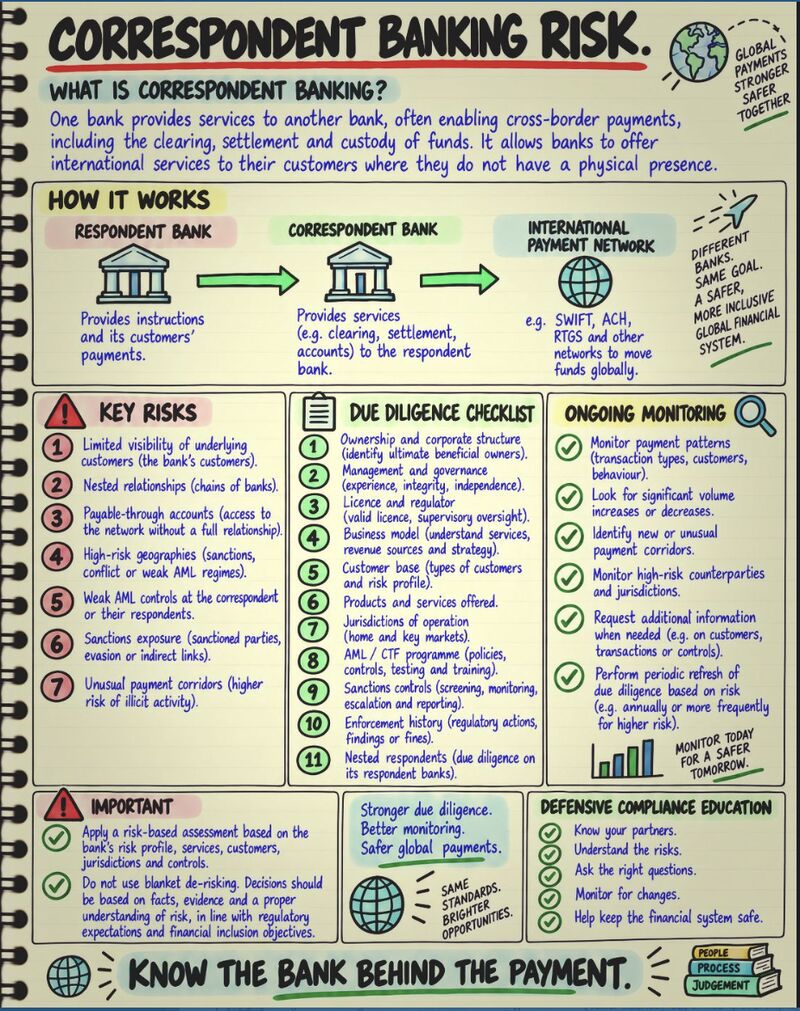
Correspondent banking is vital for cross-border payments—but it can also reduce visibility into the underlying customers and transactions.
That is why strong due diligence matters. Banks should understand a respondent institution’s ownership, management, licensing, regulator, customer base, products, jurisdictions, AML framework, sanctions controls, and enforcement history.
Enhanced attention is especially important for nested relationships, payable-through accounts, unusual payment corridors, and higher-risk geographies.
Risk management must also be ongoing: changes in transaction volumes, counterparties, customer profiles, or geographic exposure can materially change the risk picture.
The goal is not indiscriminate de-risking. It is informed, proportionate risk management.
To understand the payment, first understand the bank behind it.
#CorrespondentBanking #AML #KYC #FinancialCrime #SanctionsCompliance #TransactionMonitoring #RiskManagement #Compliance