How you approach potential risk in a transaction can make all the difference in the world as pointed out by this compliance professional in his LinkedIn post below.
He explains how he does it without the process becoming overwhelming or difficult. When you read his post, it really comes down to taking common sense steps and procedures that can be applied to prevent a risky transaction from occurring.

Sambhaji Chougule
Merchant Onboarding Executive | AML & KYC Analyst
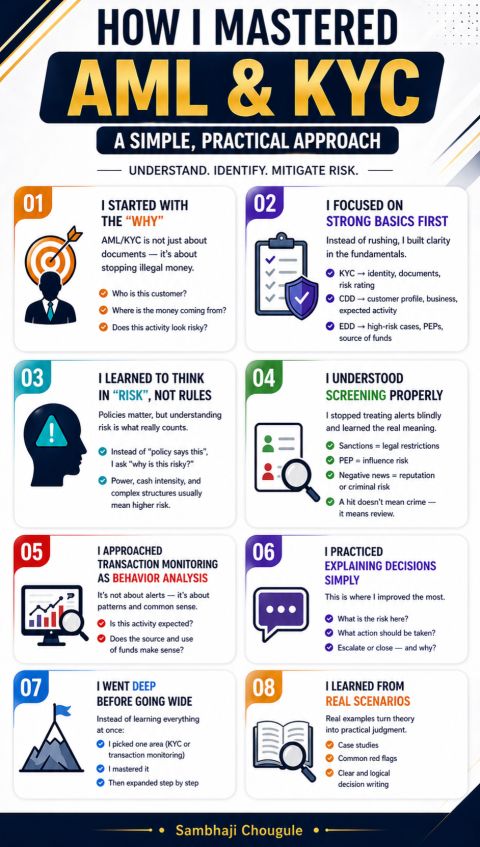
How I Mastered AML & KYC (A Simple, Practical Approach)
Most people struggle with AML/KYC because they learn things randomly… not in a structured way.
Here’s the approach that actually helped me understand it better 👇
1. I started with the “why”
AML/KYC is not just about collecting documents it’s about preventing illegal money from entering the system.
So I trained myself to always ask:
• Who is this customer?
• Where is the money coming from?
• Does this activity make sense or look risky?
2. I focused on strong basics first
Instead of rushing into advanced topics, I built clarity in fundamentals:
• KYC : verifying identity and assigning risk
• CDD : understanding what the customer does and their expected activity
• EDD : deeper checks for high-risk customers like PEPs or unusual cases
3. I learned to think in “risk”, not just rules
Anyone can follow a checklist, but real skill is understanding risk.
I stopped saying “policy says this” and started explaining:
→ Why exactly is this risky?
Things like high cash usage, complex structures, or political exposure usually increase risk.
4. I understood screening properly
At first, every alert felt serious. Later I learned the difference:
• Sanctions : legal restrictions (must act carefully)
• PEP : higher scrutiny due to influence
• Negative news : potential reputation or criminal risk
And most importantly:
A match (hit) doesn’t mean wrongdoing it just means it needs review.
5. I approached transaction monitoring as behavior analysis
It’s not just about alerts popping up it’s about patterns.
I started asking:
• Is this activity expected based on the profile?
• Does the source and usage of funds align logically?
6. I practiced explaining decisions clearly
This is where most people struggle.
I worked on answering in a simple way:
• What is the risk here?
• What action should be taken?
• Should it be escalated or closed and why?
7. I went deep before going wide
Instead of trying to learn everything together:
• I focused on one area (like KYC or transaction monitoring)
• Built strong understanding
• Then expanded step by step
8. I learned from real scenarios
Theory helps, but real learning comes from examples:
• Case studies
• Common red flags
• Writing clear, practical decisions
If you want to grow in AML/KYC, don’t just memorize terms…
Start thinking like someone who is actually assessing risk.
That’s the real game.
Don’t forget to follow Sambhaji Chougule for more informative AML KYC Insights 🙏
#AML #KYC #Compliance #FinancialCrime #RiskManagement #AntiMoneyLaundering #CareerGrowth #FinTech #BankingJobs #ComplianceCareers #Upskill #LinkedInTips #Learning