It cannot be stated enough that financial institutions need to be applying KYC and doing ongoing transaction monitoring if they are serious about preventing fraud from removing money from their clients/members‘ savings accounts. This LinkedIn post is another reminder of the importance of transaction monitoring in stopping fraud.

Senior Fraud Analyst at Bank of America | Fraud prevention and detection (REG CC) | Transaction monitoring | Debit card Fees Operation (REG E) | Chargeback analysis
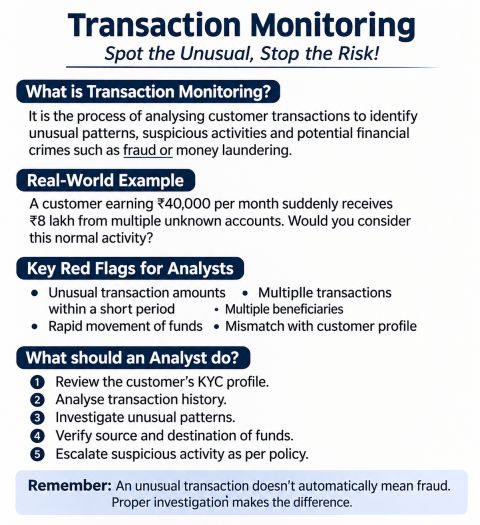
🔍 TRANSACTION MONITORING – Spot the Unusual, Stop the Risk!
What if a customer earning ₹40,000 per month suddenly receives ₹8 lakh from multiple unknown accounts?
Would you consider this normal activity?
What is Transaction Monitoring?
It is the process of analysing customer transactions to identify unusual patterns, suspicious activities and potential financial crimes such as fraud or money laundering.
🚩 Key Red Flags for Analysts:
– Unusual transaction amounts
– Multiple transactions within a short period
– Multiple beneficiaries
– Rapid movement of funds
– Mismatch with customer profile
🕵️ What should an Analyst do?
1. Review the customer’s KYC profile.
2. Analyse transaction history.
3. Investigate unusual patterns.
4. Verify source and destination of funds.
5. Escalate suspicious activity as per policy.
💡 Remember: An unusual transaction doesn‘t automatically mean fraud. Proper investigation makes the difference.
#TransactionMonitoring #AML #FraudPrevention #FinancialCrime
#AML #FraudPrevention #FinancialCrime #FraudRisk #BankingOperations #AMLCompliance #KYC #CDD #EDD #FraudDetection #RiskManagement #FinancialServices #AntiMoneyLaundering #Compliance #FraudAnalyst #AMLAnalyst
Financial Services Operations | Operations Management | Team Leadership | Risk & Compliance | Quality Assurance | Process Improvement
From my experience in AML investigations, unusual activity is only the starting point. Comparing transactions against the customer’s profile, reviewing historical patterns, and understanding the source of funds are essential to assessing potential risks. A strong investigation doesn’t assume suspicious activity; it follows the evidence to reach a defensible conclusion.