Anyone committed to and interested in seeing progress on the global fight to reduce the scourge of fraud and scams which are wreaking havoc on thousands of consumers in G20 countries and beyond should follow and learn more about the research work the Organization for Economic Co-operation and Development (OECD) is heading up in this area of financial crime.
The following two key paragraphs speak directly to consumer financial harm and why therefore the 100 government authorities involved in the recently released OECD report on Protecting Consumers from Financial Scams and Frauds must continue working together to build strong financial consumer protection frameworks to not only protect their own domestic consumers but share best practices and information on criminal activity that often emanates from bad actors exploiting other country’s consumers from afar.
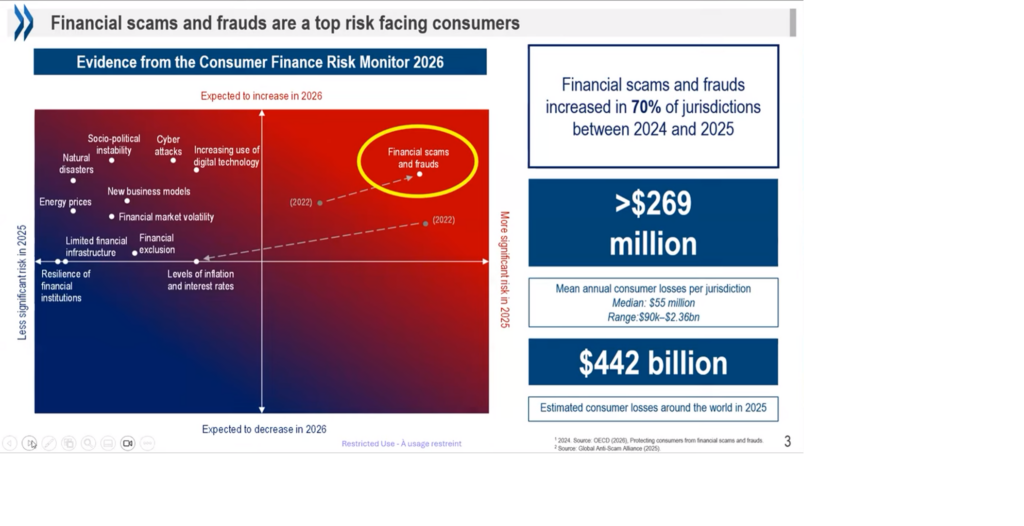
As the recent OECD Consumer Finance Risk Monitor 2026 highlighted, financial scams and frauds are one of the top risks facing consumers today, and they can cause significant financial harm. They also threaten to erode consumers’ public trust and confidence in financial products and services and undermine gains made in expanding access to them.
The new report “Protecting Consumers from Financial Scams and Fraud” analyses the drivers of financial scams and frauds, articulates a typology of scams and frauds, and discusses effective financial consumer protection and financial education policies. It reflects the insights of over 100 government authorities and aims to help them and other stakeholders to better detect and counter financial scams and frauds.
The complete OECD report on protecting consumers from financial scams and frauds can be found by clicking on financial scams and frauds.
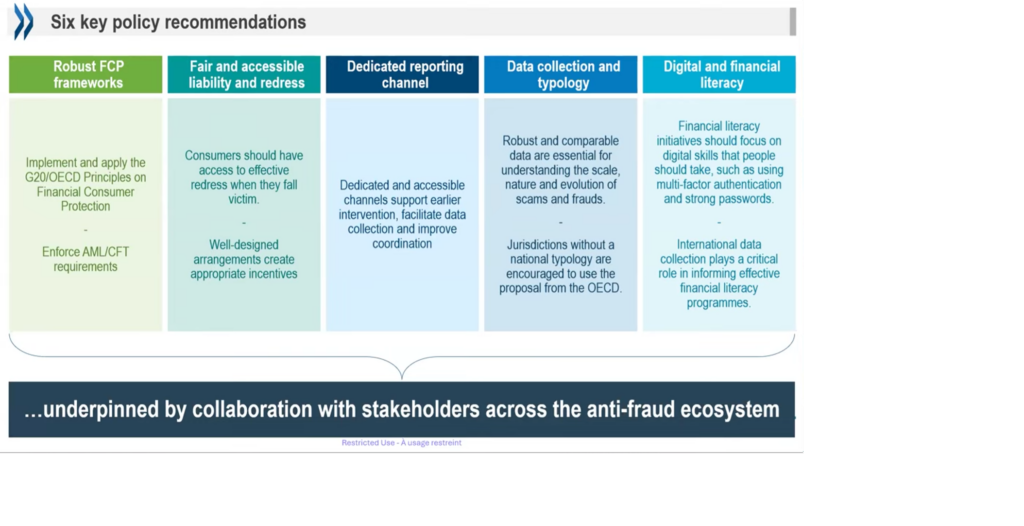
A summary of the report can largely be provided by the infographic below, which includes six recommendations.
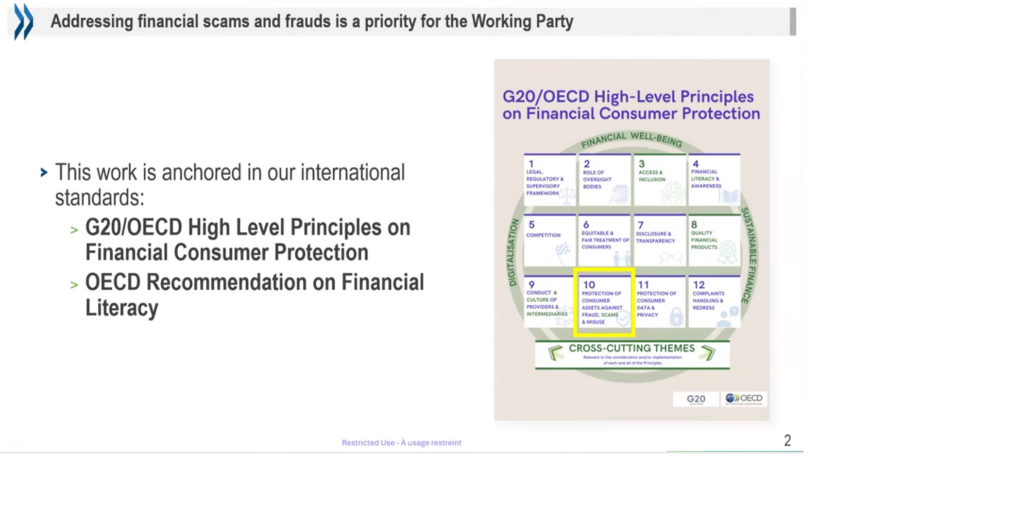
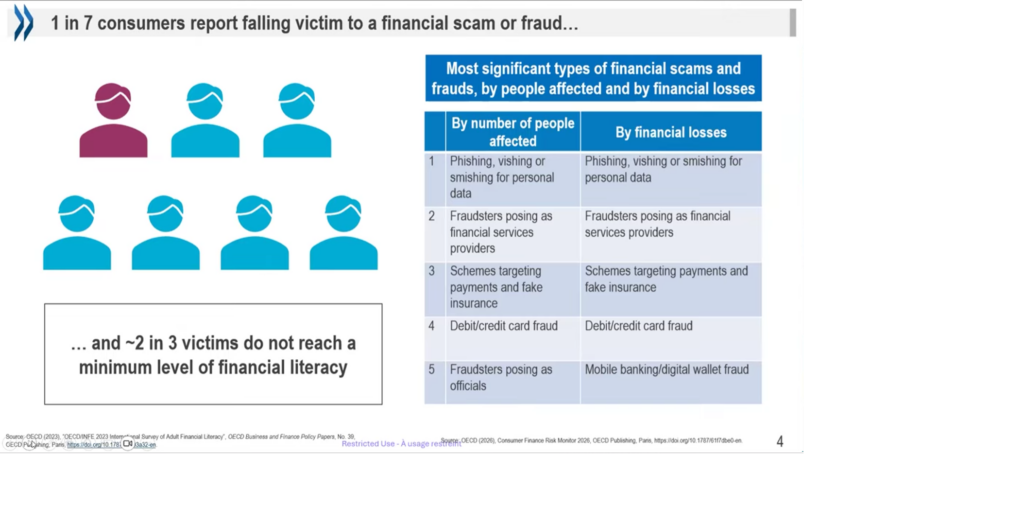
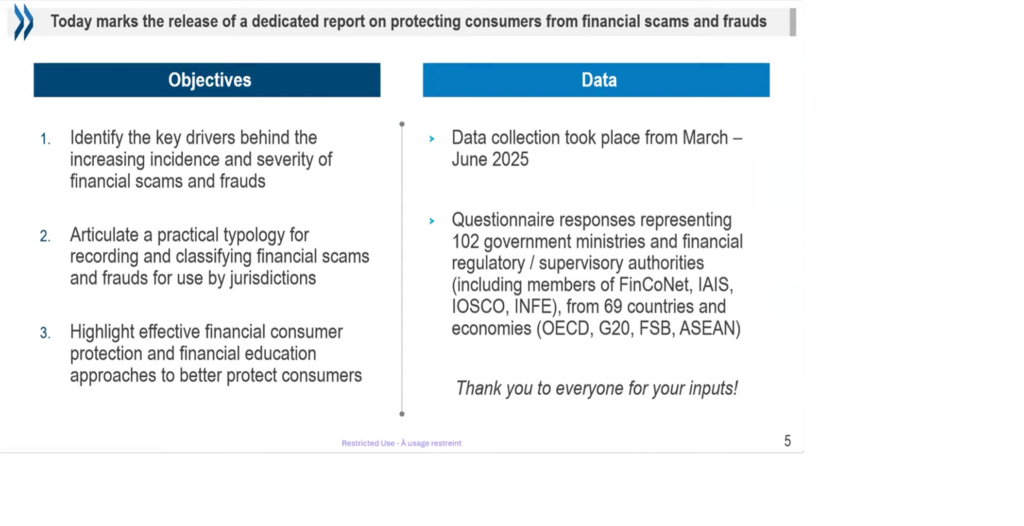
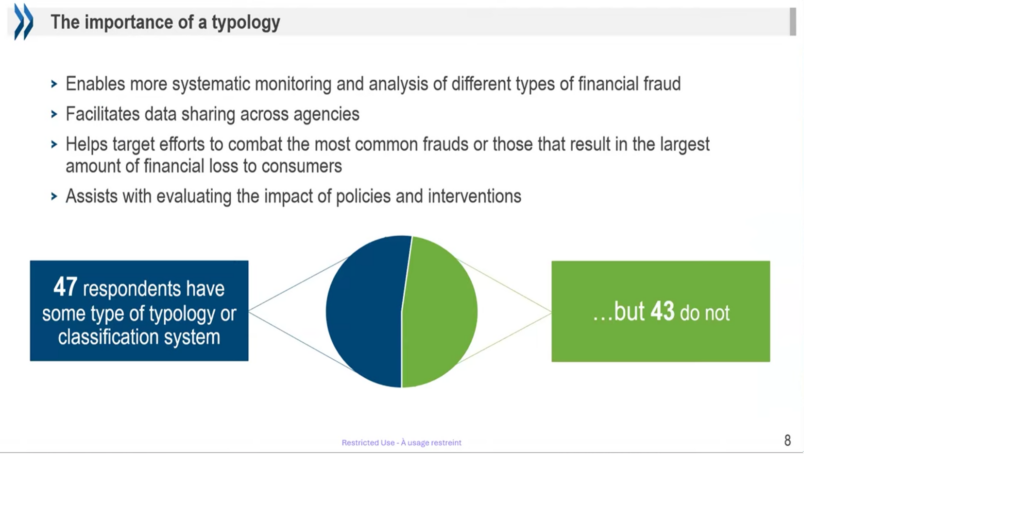
Another table highlighted below from this report is the basis and foundation for OECD’s work in this area. For they have already established high level principles through G20 countries on consumer financial protection.
Insert Figure 1.1 from full OECD report
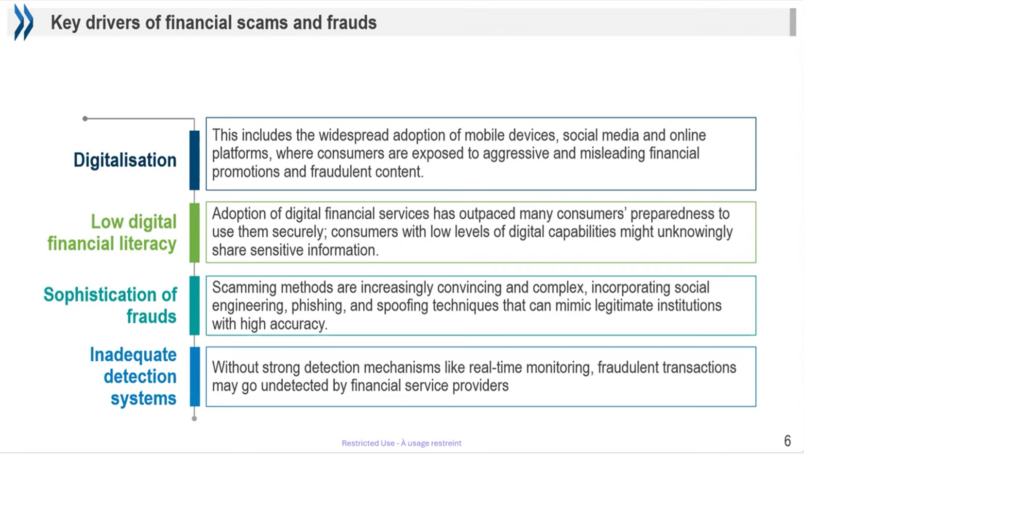
The key drivers behind financial consumer fraud include digitalization, low digital financial literacy, sophistication of fraud, and inadequate detection systems.
Digitalization is all about moving away from bricks and mortar in banking to everything being online with apps to help us along the way. As OECD official Carmen De Noia points out in a brief PowerPoint slide presentation as part of launching this report, digitization “includes the widespread adoption of mobile devices, social media and online platforms, where consumers are exposed to aggressive and misleading financial promotions and fraudulent content.
Low digital financial literacy is part of the current fraud problem since many consumers are not keeping up or fully conversant on adopting digital financial services securely. As a result, they can unknowingly share sensitive information.
Simply put, sophistication of fraud is exactly what it says it is. The deception employed with use of techniques enabled by AI (e.g., voice cloning, deepfakes, impersonation) is tricking consumers into believing they are real. De Noia states, “Scamming methods are increasingly convincing and complex, incorporating social engineering, phishing, and spoofing techniques that can mimic legitimate institutions with high accuracy.”
Finally, inadequate detection systems is an issue with financial service providers failing to use strong “detection mechanisms like real-time monitoring” to successfully detect and stop fraudulent transactions.
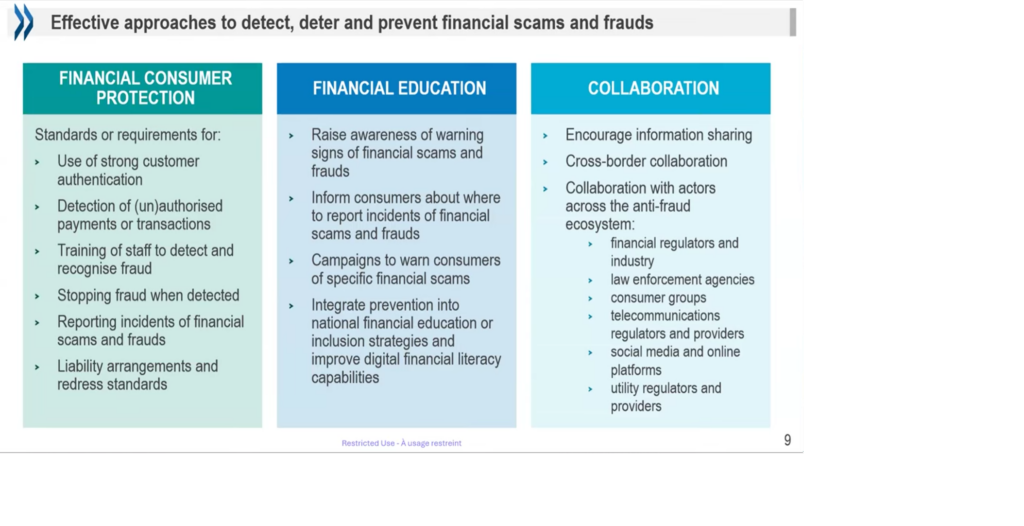
Effective approaches to detect, deter and prevent financial scams and frauds are noted in the slide below. They are broken down into three areas which encompass financial consumer protection, financial education, and collaboration.
Standards or requirements for financial consumer protection include use of strong customer authentication, detection of un (authorized) payments or transactions, training of staff to detect and recognize fraud, stopping fraud when detected, reporting incidents of scams and frauds, and liability arrangements and redress.
Financial education covers raising awareness of warning signs of financial scams and frauds, informing consumers about where to report incidents, campaigns to warn consumers of specific financial scams (e.g., grandparent scams targeting seniors), integrating prevention into national financial education and that includes improving digital literacy capabilities.
Collaboration is all about collaborating with actors across the anti-scam financial ecosystem and that includes financial regulators, financial service providers, law enforcement agencies, consumer groups, telecommunications regulators and providers, social media and online platforms, and utility regulators and providers.
And while the six recommendations are cited in the infographic, a brief description of them is helpful.
On the first one with respect to developing and implementing more robust financial consumer protection frameworks, OECD calls for applying the G20/OECD high level principles of financial consumer protection. It also wants more done on enforcing AML/CFT requirements.
On fair and accessible liability and redress, the report says consumers there should have access to effective redress when they fall victim and raise the point of well-designed arrangements will create appropriate incentives.
On having a dedicated reporting channel, the positive attribute of a well understood and functioning one will “support early intervention, facilitate data collection and improve coordination.”
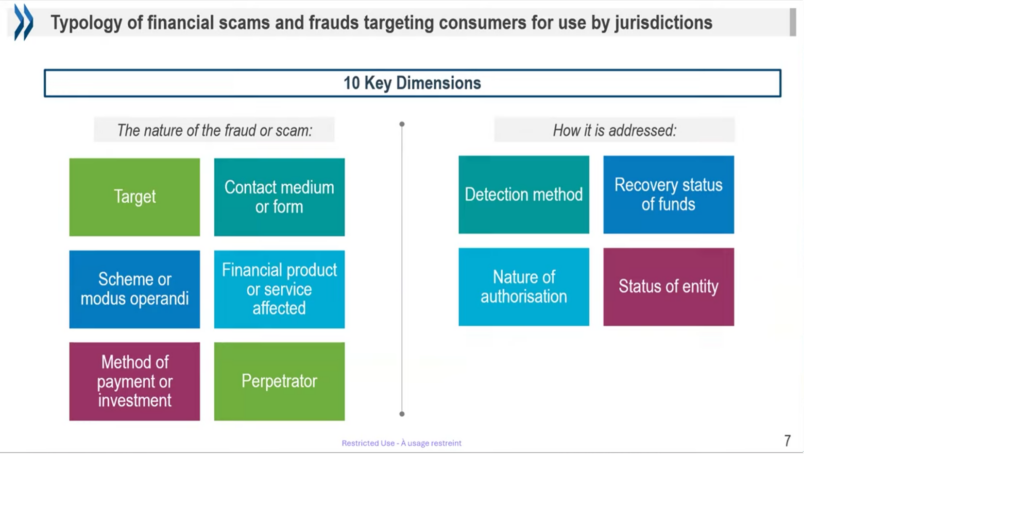
The fourth recommendation on establishing and following a solid and active data collection typology will be instrumental in helping “understand the scale, nature and evolution of scams and frauds”. The OECD offers a good typology in this report for jurisdictions to adopt if they do not have one.
Digital and financial literacy is self-explanatory but jurisdictions and the financial services providers directly on the frontlines need to commit to focus on initiative which upgrade consumer knowledge and skills in this important area where it has been identified as one that needs much improvement. Using multi-factor authentication and strong passwords are good examples of being more resilient and secure in this digital environment.
De Noia stresses with respect to the sixth one on international collaboration across the anti-scam financial eco-system how “underpinning all these efforts is the need for strong collaboration across the entire anti-fraud ecosystem. Financial scams and fraud cut across sectors and borders. No single actor can address them alone. So, collaboration is needed across the anti-fraud ecosystem including the financial services industry, law enforcement bodies, payment service providers, digital platforms, telecommunications operators, and of course consumer representatives who can ensure that victims’ perspective inform policy design.”