Ongoing coverage will continue to assess and attempt to understand how such a leading and major US bank can be so lax in its failure to do what it is required under federal legislation and regulations.
For all the transactions Bank of America did not scrutinize to determine if they may be fraudulent is disturbing. What about the repercussions and negative impact on its customers since a number of them may well have been caught up in scams that would have been detected and stopped if the bank had been doing their job of protecting them?
Bank of America Fined $1.2 Billion for Lax Money-Laundering Oversight
Federal regulators said the bank had waved through suspicious transactions without proper care.
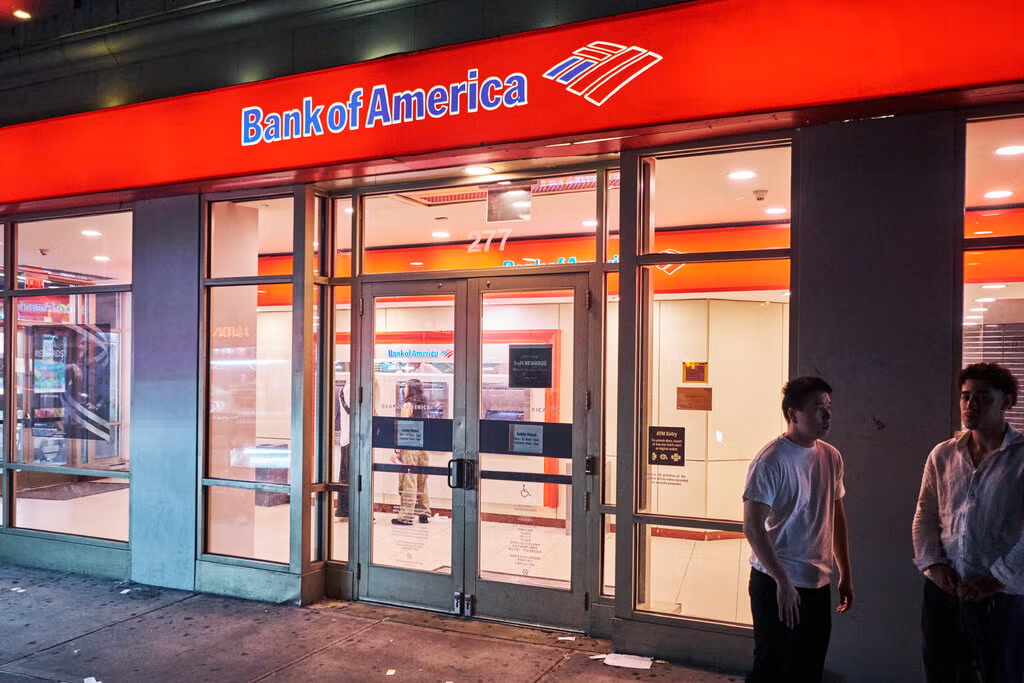
Federal regulators reported systemic gaps in Bank of America’s money-laundering compliance program. Credit: An Rong Xu for The New York Times

By Rob Copeland
Published Oct. 13, 2026 Updated Oct. 14, 2026
Bank of America on Tuesday was fined $1.2 billion, a near-record, for overlooking money laundering and other suspicious customer payments that crisscrossed between the United States and countries such as Russia, Belarus and Mexico.
The illicit money was waved through even after securities regulators chided the bank two years ago over suspected money laundering and told it to be more vigilant.
Scores of transactions continued to cross easily as part of trillions of dollars of activity that the bank didn’t adequately monitor, the Treasury Department and the Office of the Comptroller of the Currency said in a joint statement announcing the fines.
Some of the transactions could be explained as “human error,” the Treasury Department said. Others demonstrated what regulators called systemic gaps in the bank’s compliance program, with Bank of America at times failing to make even cursory efforts to investigate suspicious activity.
Banks are required to file “suspicious activity reports” with the federal government when they believe transactions could be part of a money-laundering scheme, fraud or other illegal activity. Regulators said Bank of America had regularly avoided that, ignoring “large volumes of suspicious activity implicating national security-related risks,” including $600 million of transactions just involving salvaged vehicles.
It took Bank of America more than six months, in many instances, to file SARs — when it did so at all.
“Today’s actions send a clear message that even the biggest financial institutions are not above the law,” Treasury Secretary Scott Bessent said in a statement.
Bank of America neither admitted nor denied the accusations. A spokeswoman, Christa Robinson, provided a statement that did not directly address the substance of the Treasury’s accusations but noted that the bank had worked with regulators to come to a resolution.
“We have invested billions of dollars in technology and dedicated thousands of employees to combat financial crime, and our team is far along with and committed to completing the work required to address the issues raised by our regulators,” Ms. Robinson said.
Bank of America is slated to report its quarterly earnings on Wednesday, and analysts expect that it earned about $8 billion in profit for the three-month period.
Last week, The New York Times published an analysis detailing how Russian companies evaded Western sanctions by funneling money through a Chinese bank with accounts at large Wall Street banks, including Bank of America.
The penalty on Tuesday was rare in both its size and its timing. Bank of America’s compliance with money-laundering laws was investigated under the Biden administration, but the Trump administration has taken a more relaxed approach to financial oversight. In recent weeks, however, regulators have been targeting banks on a range of issues.
Last week, the Federal Reserve and the Office of the Comptroller of the Currency fined American Express $350 million for failing to properly monitor billions of dollars of suspicious transactions that regulators said had spanned a decade.
Separately, Trump housing regulators said last week that they were investigating Wells Fargo over whether its lending efforts to encourage Black homeownership constituted racial discrimination.
Corrected on Oct. 13, 2026: An earlier version of this article misstated the amount that Bank of America was fined. It was $1.2 billion, not $1.8 billion. The error was repeated in the headline.
We acknowledge mistakes in our reporting with corrections. If you spot an error, please let us know at corrections@nytimes.com.Learn more.
Rob Copeland is a finance reporter for The Times, writing about Wall Street and the banking industry.
A version of this article appears in print on Oct. 15, 2026, Section B, Page 3 of the New York edition with the headline: Bank of America Is Fined $1 Billion for Lax Oversight. Order Reprints | Today’s Paper | Subscribe
See more on: Bank of America Corporation, Treasury Securities
Explore Our Business and Tech Coverage
Dive deeper into the people, issues and trends shaping the worlds of business and technology.
A Push to Restore Indie TV: A new alliance seeks legislation to force the biggest entertainment and streaming companies to devote half of their content budgets to independent producers in the U.S.
Someone Might Be Stealing Your Home: A letter arrived in the mail from PNC Bank about an address change on a mortgage account. Was a deed theft scheme in process?
The VW Bus, Now Electrified: A restored version of Volkswagen’s Flower Power-era Microbus is aiming for the affluent, while VW’s own E.V. is slow to get moving, much like its forebear.
Corner Office: RJ Scaringe, Rivian’s C.E.O, thinks it will take robots, tariffs and diplomacy to maintain a manufacturing base in the United States.
Shop Talk: Employees at leading artificial intelligence companies are trading in specific, and impressive, titles — like “chief technical officer” and “senior software engineer” — in favor of a vague one: “member of the technical staff.”
Square Feet: When do rules on historic preservation go too far?
Work Friend: An office manager is dealing with a contagious aversion to overhead lights.
Related Content