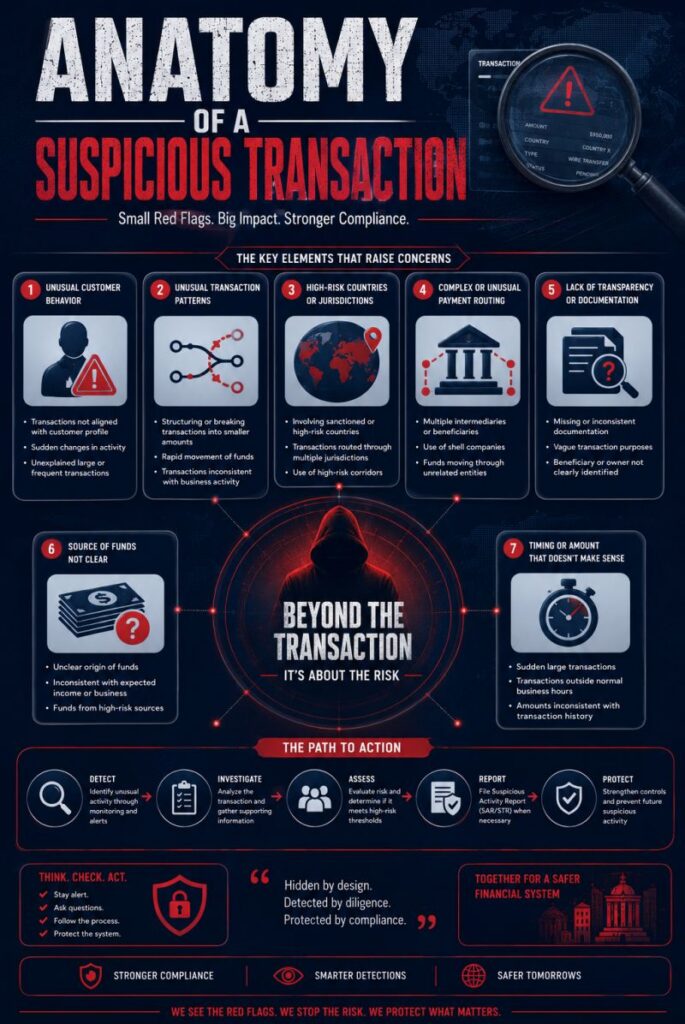
This post, with its sharp and informative graphic on the anatomy of a suspicious transaction, does a good job in brief fashion to highlight the importance of what you need to do as a financial institution to detect and prevent fraud.
Many good points made here with the one bolded and cited below a must do activity if a financial institution is serious about achieving good outcomes and results for protecting the customer and maintaining the integrity of the financial system.
Timely monitoring, thorough investigations, and accurate reporting are essential to protecting the integrity of the financial system.
Would it not be everyone’s aspiration who are involved in fraud prevention to read a story a few years from now which is showing marked improvement of not just the number of scams and frauds which are being detected and reduced from happening, but the average amount of money individual victims are losing?
Not that any amount of money lost to a customer cannot be very upsetting and devastating but large amounts of money in the hundreds of thousands consumers have had removed from them in a financial institution without verification of the transaction’s legitimacy has to be one that can be stopped.

Abel T. Thomas, CAMS
CAMS Certified Aml & Complaince professional | Financial Crime Prevention | AML Risk & Governance | Exchange House,Fintech and Retail banking | UAE.
Every suspicious transaction tells a story, but identifying the risk requires looking beyond the transaction itself.
Unusual customer behavior, unexpected transaction patterns, high-risk jurisdictions, and complex payment routes can all be indicators that deserve closer attention.
No single red flag automatically confirms financial crime, but multiple indicators together may point to elevated risk.
This is why AML professionals assess transactions within the context of the customer’s profile, expected activity, and overall risk rating.
Effective investigations combine transaction analysis, customer due diligence, source of funds information, and supporting documentation to form a complete picture.
A risk based approach helps compliance teams distinguish legitimate business activity from potentially suspicious behavior while reducing unnecessary escalations.
Timely monitoring, thorough investigations, and accurate reporting are essential to protecting the integrity of the financial system.
Technology can identify patterns and generate alerts, but human judgment remains critical in evaluating context and making informed decisions.
In AML, it is not just about detecting suspicious transactions,it is about understanding the story behind them and responding appropriately.
#AML #AntiMoneyLaundering #FinancialCrime #FinancialCrimeCompliance #SuspiciousTransaction #TransactionMonitoring #AMLInvestigation #Compliance #RiskManagement #KYC #CDD #EDD #ComplianceOfficer #BankingCompliance #RegTech #FinCrime #CAMS #RiskBasedApproach #FinancialIntegrity #LinkedInLearning