As the title says on this post all financial institutions whether through AML requirements which obligated them to follow and comply with, or just responsible banking practice to protect the client who has entrusted them with their money and wealth management, it should be both in terms of preventing fraud.
The word inconsistent (bolded below) is used here. It is a good one as it describes a situation when a client or member in the case of a credit union, is doing something not typical at all in respect to their online banking activity or coming into a branch to carry out a transaction. If so, as stated here in this LinkedIn post, it “warrants further review and investigation”.
There are a number of red flags listed below, but it does come back to understanding the context of a client who is engaged in a real departure from what they normally do. So, stop and think about why they are doing this, and what is the risk involved for them if in fact they are being manipulated to do a transaction that is illegal and will result in money going into proceeds of crime.

Kisan Kumar Nayak
Deputy Area Manager- Risk Containment Unit at Bajaj Finserv || Ex- ICICI Bank || Ex- L&T Fin.
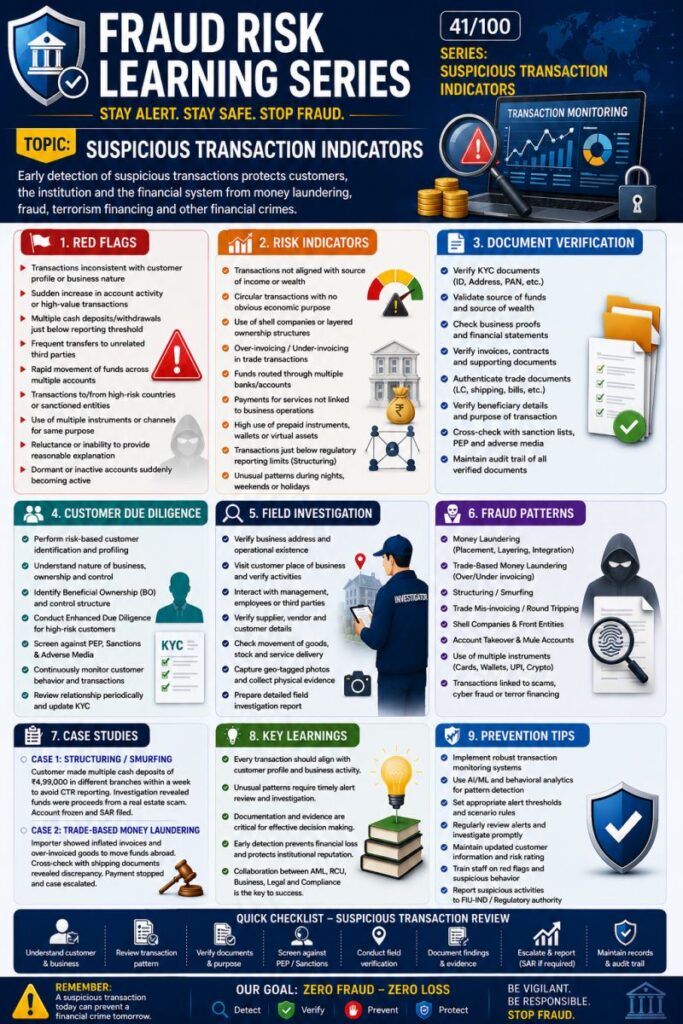
🛡️ Fraud Risk Learning Series 41/100
📌 Topic: Suspicious Transaction Indicators
Every financial transaction tells a story—but not every story is genuine. Identifying Suspicious Transaction Indicators (STIs) is one of the most effective ways to detect fraud, money laundering, terrorist financing, tax evasion, and other financial crimes before they cause significant losses.
Suspicious transactions are not necessarily illegal by themselves. However, when a transaction is inconsistent with a customer’s profile, business activity, or expected financial behaviour, it warrants further review and investigation.
🚩 Key Red Flags
🔴 Sudden spike in transaction volume without a valid business reason.
🔴 Multiple cash deposits or withdrawals just below reporting thresholds (structuring/smurfing).
🔴 Frequent transfers to unrelated third parties.
🔴 Rapid movement of funds through multiple accounts.
🔴 High-value transactions inconsistent with the customer’s income or business profile.
🔴 Transactions involving high-risk jurisdictions or sanctioned entities.
🔴 Reluctance to provide transaction purpose or supporting documents.
🔴 Dormant accounts becoming suddenly active with large transactions.
🔍 Verification & Risk Mitigation:
✅ Understand the customer’s expected transaction behaviour through effective KYC and CDD.
✅ Verify the source of funds and source of wealth.
✅ Review transaction history and identify unusual patterns.
✅ Screen customers against sanctions, PEP, and adverse media databases.
✅ Conduct Enhanced Due Diligence (EDD) for high-risk customers.
✅ Escalate suspicious activities to the AML Compliance team for investigation.
✅ Maintain complete documentation and audit trails.
✅ File regulatory reports wherever required in accordance with applicable laws and internal policies.
💡 Key Learning
✔️ Not every unusual transaction is fraudulent—but every unusual transaction deserves appropriate scrutiny.
✔️ Strong transaction monitoring, customer due diligence, and timely escalation are the foundation of an effective AML and Fraud Risk framework.
✔️ Early detection protects customers, financial institutions, and the integrity of the financial system.
📌 This post is shared for learning and awareness purposes only. It is intended to promote knowledge of Customer Due Diligence (CDD), AML/KYC, and fraud risk management practices. It should not be considered legal, regulatory, or compliance advice.
#FraudRisk #DocumentForgery #RiskManagement #KYC #AML #Banking #FinancialCrime #FraudPrevention #LinkedInLearning
#FraudRiskLearningSeries #FraudPrevention #FinancialCrime #RiskManagement #Banking #KYC #CDD #EDD #AML #AMLCompliance #AntiMoneyLaundering #Compliance #SanctionsScreening #OFAC #DueDiligence #KnowYourCustomer #FraudInvestigation #FinancialServices #OperationalRisk #RCU #FCU #NBFC #CreditRisk #RiskProfessionals #BankingProfessionals