A very sad story but one not entirely surprising given what devastation and an absolutely life-altering event an unexpected fraud can do to wreak havoc on an innocent victim that did not see it coming.
Good for LinkedIn author Tom O’Malley for sharing this post. It is just not another faceless statistic or number on countless victims of fraud. There is a real person behind this one and it tells a story about the gentleman who took his life at 48 and had so much to give and do for many more years to come if this tragedy had not befallen him. It also garnered some good comments below which resonated with other Linked In subscribers. As David Coffey says, may Mr. Eric Inaba rest in peace.

Tom O’Malley
Retired federal cybercrime and identity theft prosecutor, building Scam Wize with AI scam detection tools and scam education videos, built and donated FrozenPii.com to the non-profit Identity Theft Resource Center
When Bank Customers Commit Suicide Because Their Bank Failed To Stop Scam-Induced Cash Withdrawals, Maybe It’s Time For Banks To Do a Better Job Protecting Their Customers’ Money.
How does a bank let a customer slowly withdraw their life savings in $10,000, $15,000 and $20,000 ATM withdrawals?
“Eric Inaba was the kind of person other people built their memories around. He grew up in Pullman, Washington; loved the Chicago Bears; and spent his career caring for adults with disabilities at a residential home, work his family says was his calling.
‘If anyone’s going to remember anyone, they’ll remember Eric, because he was so genuine,’ his younger sister, Christine, recalled. When Eric asked how you were doing, it was never a line. ‘He really wanted to know how you were.’
Unfortunately, a scammer weaponized that same kindness and openness against Eric. ‘He was too trusting of people,’ his father, Fred Inaba, said. ‘I think that was his downfall.’
In the fall of 2023, that trust cost Eric roughly USD 325,000 — nearly everything he had saved — when a scammer posing as tech support convinced him his money was in danger. He told no one. And before his family understood what was happening, Eric had taken his own life.
It all started with a fake Norton alert
The scam began around September 8, 2023, with a message claiming to be from Norton, the antivirus company. The premise of these tech-support scams is simple: your computer or your money is at risk, and you need to take immediate action to protect it.
Eric had dedicated his life to helping and serving others in his community, but he was not an expert with computers — like many people who are targeted by similar scams. When he saw the alert, he had no reason not to believe it was real. ‘It just wouldn’t have been in his realm of knowledge,’ Christine said. ‘I don’t really think he would have questioned it.’
The scammer didn’t steal Eric’s money straight away. He kept Eric on the line for weeks, and phone records would later show roughly 321 separate communications between Eric and a single suspect operating under the name David Wells. Under that pressure, Eric began withdrawing cash late at night and converting it into bitcoin, telling no one.
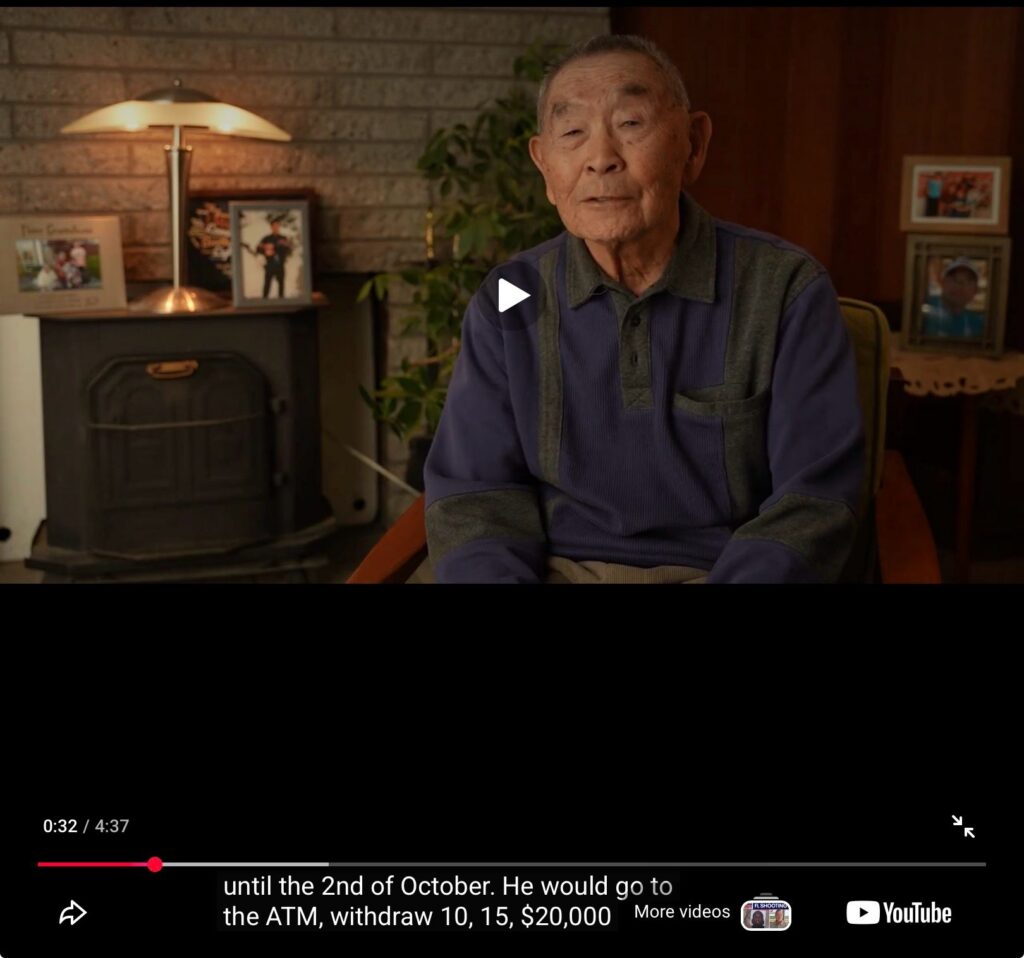
‘He never told us about his ATM withdrawals,’Fred said. ‘He would do it late at night. He would go to the ATM and withdraw $10,000, $15,000, $20,000.’ The family only pieced it together afterward, from bank statements. ‘He must have been under tremendous stress to be doing these things in the middle of the night,’ Fred said.
When Eric didn’t show up for work
The first sign that something was wrong was when Eric — a person with a track record of perfect attendance — didn’t show up for work. On November 1, 2023, patrol responded to a welfare check at his Spokane Valley apartment. An officer made entry and found Eric deceased inside.”
https://lnkd.in/eESsCpAh