While public awareness of scams to bring attention to ones such as grandparent, romance and investment frauds tend to be centered around March since it is Fraud Awareness Month, a senior in Nova Scotia just revealed the following month that she has been taken in on a romance scam for $139,999.
It is devastating and very sad that more cannot be done to stop these scams or at least interrupt them in progress as it is obvious that education and public awareness campaigns can only go so far.
People lead busy lives. It is not realistic nor reasonable to expect them to keep up on everything including campaign warnings about learning how fraud schemes may be targeting them and how to avoid being defrauded. Where are the checks and balances in the banking system to help seniors from losing their life savings? Fraudsters are ruthless and highly efficient in removing innocent victims of their money.
Good for Zaheer Doodhwalla for bringing this case to our attention (link to CBC story on the Nova Scotia senior is at the bottom of his post below).

Fraud Prevention Strategy | Payments, Network rails & AI-Driven Fraud
$𝟭𝟯𝟬,𝟬𝟬𝟬 𝗴𝗼𝗻𝗲 — 𝗻𝗼𝘁 𝗳𝗿𝗼𝗺 𝗮 𝗵𝗮𝗰𝗸, 𝗯𝘂𝘁 𝗳𝗿𝗼𝗺 𝘁𝗿𝘂𝘀𝘁.
A recent case out of Nova Scotia highlights a harsh reality:
𝘁𝗼𝗱𝗮𝘆’𝘀 𝗺𝗼𝘀𝘁 𝗱𝗮𝗺𝗮𝗴𝗶𝗻𝗴 𝗳𝗿𝗮𝘂𝗱 𝘀𝗰𝗵𝗲𝗺𝗲𝘀 𝗱𝗼𝗻’𝘁 𝗯𝗿𝗲𝗮𝗸 𝘀𝘆𝘀𝘁𝗲𝗺𝘀 — 𝘁𝗵𝗲𝘆 𝗯𝘂𝗶𝗹𝗱 𝗿𝗲𝗹𝗮𝘁𝗶𝗼𝗻𝘀𝗵𝗶𝗽𝘀.
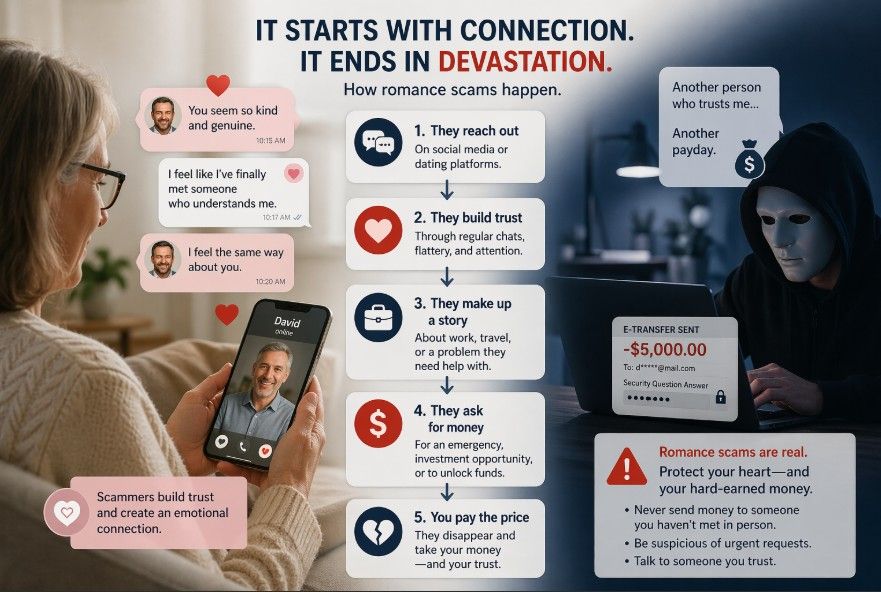
What started as a casual interaction on social media quickly evolved into:
• Frequent conversations → emotional trust established
• Shared “professional” background → credibility reinforced
• Investment opportunity → financial hook introduced
• Repeated e-transfers → $130K lost over time
This wasn’t rushed. It was 𝗽𝗮𝘁𝗶𝗲𝗻𝘁, 𝗰𝗮𝗹𝗰𝘂𝗹𝗮𝘁𝗲𝗱, and 𝗵𝘂𝗺𝗮𝗻-𝗰𝗲𝗻𝘁𝗿𝗶𝗰.
📊 𝗧𝗵𝗲 𝗯𝗶𝗴𝗴𝗲𝗿 𝗽𝗶𝗰𝘁𝘂𝗿𝗲 𝗶𝗻 𝗖𝗮𝗻𝗮𝗱𝗮
• Canadians lost $63M to romance scams in 2025 alone
• Social media has significantly amplified scale and reach
• Seniors remain disproportionately targeted due to:
1. accumulated savings
2. higher trust thresholds
3. varying digital literacy
⚠️ 𝗧𝗵𝗲 𝘂𝗻𝗰𝗼𝗺𝗳𝗼𝗿𝘁𝗮𝗯𝗹𝗲 𝘁𝗿𝘂𝘁𝗵
This isn’t just a “customer awareness” issue anymore.
It raises bigger questions for the ecosystem:
• Should financial institutions 𝗶𝗻𝘁𝗲𝗿𝘃𝗲𝗻𝗲 𝗺𝗼𝗿𝗲 𝗮𝗴𝗴𝗿𝗲𝘀𝘀𝗶𝘃𝗲𝗹𝘆 on unusual transfer patterns?
• Where is the line between 𝗰𝘂𝘀𝘁𝗼𝗺𝗲𝗿 𝗮𝘂𝘁𝗼𝗻𝗼𝗺𝘆 vs 𝗱𝘂𝘁𝘆 𝗼𝗳 𝗰𝗮𝗿𝗲?
• Are current controls enough for authorized push payment (APP)-style 𝘀𝗰𝗮𝗺𝘀?
Because in cases like this:
👉 Transactions were authorized
👉 But the intent was manipulated
🛡️ What needs to evolve
𝟭. 𝗙𝗼𝗿 𝗶𝗻𝗱𝗶𝘃𝗶𝗱𝘂𝗮𝗹𝘀:
• Be cautious of online-only relationships tied to financial requests
• Treat investment advice from strangers as high-risk
• Pause on urgency — scammers rely on emotion + momentum
𝟮. 𝗙𝗼𝗿 𝗶𝗻𝘀𝘁𝗶𝘁𝘂𝘁𝗶𝗼𝗻𝘀:
• Strengthen behavioral anomaly detection (not just transaction rules)
• Introduce friction for high-risk e-transfers (new payees, large values)
• Expand customer education at the point of transaction
🧠 𝗠𝘆 𝘁𝗵𝗼𝘂𝗴𝗵𝘁
Fraud is no longer just a security problem.
It’s a human vulnerability problem — engineered at scale.
And until we design controls that account for human behaviour,
these losses will continue to feel both avoidable… and inevitable.
Check the link to full article by CBC in the comment below
#𝗙𝗿𝗮𝘂𝗱𝗣𝗿𝗲𝘃𝗲𝗻𝘁𝗶𝗼𝗻 #𝗦𝗰𝗮𝗺𝗔𝘄𝗮𝗿𝗲𝗻𝗲𝘀𝘀 #𝗖𝘆𝗯𝗲𝗿𝗦𝗲𝗰𝘂𝗿𝗶𝘁𝘆 #𝗣𝗮𝘆𝗺𝗲𝗻𝘁𝘀 #𝗙𝗶𝗻𝘁𝗲𝗰𝗵 #𝗖𝗮𝗻𝗮𝗱𝗮 #𝗙𝗿𝗮𝘂𝗱𝗦𝘁𝗿𝗮𝘁𝗲𝗴𝘆